Custom Software Development Companies

Top Custom Software Development Companies in 2025

In today’s increasingly fast-paced digital environment, businesses require more than off-the-shelf software products. Businesses must have systems built specifically around their processes, goals, and customers. This is the role of a software development company. A software company will develop, design, and maintain custom software that will help companies get the most out of the business, improve the customer experience, and help the company remain competitive in their industry.

Whatever your needs are; a new startup launching the first app, or a more established business creating a roadmap to modernize its legacy systems, the future of the business could depend on finding the right custom software development company. There are numerous companies out there, all claiming to be innovative, scalable, and reliable. This may lead you in the wrong direction trying to filter through the options available. We did the work of looking for great companies, because it’s important to find the right strategic partner. We have put together this guide not just to highlight a shortlist of great companies, but also to provide some insight as to the technical capability of the companies, client satisfaction projects and some kind of innovation. 

What Do Software Development Firms Do?

Software development firms specialize in building, testing, and maintaining software applications for specific business purposes. Unlike off-the-shelf programs, which can be purchased in store, custom software solutions are developed from the ground up based on customer specifications. A software development company can manage each step in the software development life cycle from brainstorming, to design, to development and deployment, and all the future support of that software.

General services might include:

  • Custom software development (desktop, mobile, and web apps)
  • UI/UX design for user experience
  • Software integration and migration
  • Cloud-based application development
  • Quality assurance and testing
  • Software maintenance and support

Companies across industries, including healthcare, fintech, eCommerce, logistics, and education, rely heavily on these services so they can operate efficiently, securely, and competitively.

Use Cases of Custom Software Development

It’s no longer a luxury, but a requirement for companies focused on growth, custom software development. A few use cases from the real world that explain why companies are hiring software development companies include:

  • E-commerce automation: Custom inventory management and CRM systems, both of which reduce manual tasks.
  • Fintech platforms: Work on secure digital payment transactions and trading platforms, with real-time analytics and status as well.
  • Healthcare management: Design HIPAA-compliant patient management and telemedicine software.
  • Enterprise solutions: Simplifying workflows with ERP and/or HR management software.
  • Education technology: Develop e-learning platforms and virtual classrooms for online education.

Custom software ensures scalability, flexibility, and total control of data/user experience, and you can fill in the blanks with out-of-the-box applications.

Top Custom Software Development Companies

1. Wantik Technologies

Wantik Technologies is an up-and-coming custom software development company that provides customized solutions that combine innovation, security, and scalability. They create web and mobile applications, as well as enterprise and cloud-based software, that are specifically aligned with the clients’ strategic goals. Wantik is known for its modern technology stack, agile development methodology, and effort to create a seamless user experience. 

Best for:

Businesses and startups seeking a scalable, data-rich, and user-friendly digital transformation. Wantik is a perfect fit for an organization that is seeking a trusted technology partner that does product development from planning, design, developing, supporting, deploying and maintaining the product. 

2. Esferasoft Solutions

Esferasoft Solutions is a custom software and digital product engineering company that focuses on helping companies across the world leverage technology to create modern scalable and secure software systems to enhance customer experience. The company has extensive experience in providing enterprise level solutions, Ecommerce solutions, mobile application development, AI based systems, and UI/UX engineering. The company’s focus on business performance and customer satisfaction, is combined with deep technical knowledge of enterprise systems to produce performance-based solutions that drive business value.

Best For:

Businesses who want to implement or create enterprise systems, build robust mobile applications, or develop a comprehensive digital transformation strategy that focuses on customer experience and business impact.

3. Apptunix

Apptunix is an award-winning mobile and web application development company that builds innovative, attractive and performance-driven applications. Also known for their ability to deliver innovative applications for clients in a variety of industries from food delivery and Healthcare to Mobility and Logistics. Apptunix has partnered with a number of organizations to successfully deliver hundreds of innovative applications to customers. With an extensive team of designers, developers and strategists, Apptunix places an emphasis on building intuitive end user experiences, supported by scalable and secure architecture.

Best For:

SMEs and Startups who want to develop mobile apps and MVPs quickly and affordably.

4.​‍​‌‍​‍‌​‍​‌‍​‍‌ SoluLab

SoluLab is a software development company known worldwide, which excels in blockchain, AI, IoT, and next-gen digital products. As a company, SoluLab engineers state-of-the-art solutions and hence, is the choice of collaboration of enterprises, startups, and Fortune 500 companies. The breadth of their knowledge and experience in dApps, automation platforms, and intelligent systems are the reasons why they become the band of tech leaders’ partners in whom innovation and digital transformation are the ultimate goal.

Best For: 

Companies with the primary focus on the use of cutting-edge technologies like blockchain, AI automation, smart contracts, or enterprise-grade digital transformation projects.

5. Daffodil Software

Daffodil Software is a trusted tech partner that provides custom software development, digital transformation, cloud solutions, and AI-powered systems services. Having a large team of talented engineers and a rich experience of many years, Daffodil is known for creating high-performing, secure, and scalable systems that are suitable in healthcare, fintech, retail, and enterprise industries. Their approach is a mix of innovation and long-term maintainability, which provides a room for solutions to grow alongside business needs.

Best For:

Large-scale businesses that require dependable development supported by rigorous R&D, sound engineering, and scalable cloud-native architecture. Perfect for companies that want advanced integrations, analytics-driven systems, or digital ​‍​‌‍​‍‌​‍​‌‍​‍‌modernization.

Final Thoughts

In a business world that is driven by technology, software development organizations play an important role in supporting companies in building several customized, effective, and scalable digital solutions. Software development companies empower organizations to remain competitive in a constantly changing digital environment, including automation of workflows or creating interactive customer experiences to drive engagement.

An essential part of success is selecting an appropriate partner to help you develop without compromising your timeline and budget, but who also shares similar visions and goals. Enabling businesses to build products, support transforming legacy systems, or have a viable path to new technologies, will not only allow the software to effectively pursue its design but will also enable the software to grow with the company over time.


Interesting Reads

The Role of Prompt Engineering in Building Next-Gen AI Systems
How AI and ML Together Improve Cloud Computing Efficiency

AI-Powered Smart City Innovations Transforming Dubai

Next-Gen AI Systems

The Role of Prompt Engineering in Building Next-Gen AI Systems

As artificial intelligence grows more sophisticated, the manner in which we interact with these systems is evolving at a rapid pace. Rather than having to write lengthy code, or sequence complex instructions; users can now direct AI tools using natural language. However, in order for these systems to provide correct, relevant and consistent outputs, the input must be thoughtfully constructed. This is where Prompt Engineering is extremely important.

Prompt Engineering is the process of composing and structuring prompts so that AI models can comprehend the context, goal and expected output. It transpires an ordinary question into a clear and concise direction for next-gen AI systems to follow. No matter if the task is content-production, problem-solving, analysis or automation, well-structured prompts allow AI to achieve optimal performance.

Ultimately, in today’s AI driven reality, the quality of your prompt is often correlated to the quality of your output. That is why Prompt Engineering has become a staple foundation for developing smarter, more reliable and more efficient AI solutions.

Why Prompt Engineering Is Crucial for Next-Gen AI Systems

1. AI Systems Need Clarity to Perform at Their Best

Even the most advanced generative AI systems require some context and clarity to perform. Without clearly defined instructions, the responses will be broad. Prompt engineering eliminates uncertainty and establishes the model’s exact expectations.

2. It Reduces Errors and Hallucinations

Hallucinations or incorrect or fabricated information is still a challenge for AI. Structured prompting limits these risks by providing the models with boundaries, references, and rules on what to follow.

3. It Accelerates AI Development

Instead of writing complex logic, developers are now using natural-language prompts to dictate behaviours, and creating products at a much faster pace with better agility.

4. It Helps with Building More Human-Like, Reliable AI

Through intentional prompt engineering, chatbots become more conversational, tooling becomes more useful, and the overall AI functions more naturally.

5. It Increases Productivity and Automation

Teams across marketing, finance, HR, design, and research have begun to use prompt engineering for more automation and accuracy compared to manual work. 

Key Use Cases of Prompt Engineering in Next-Gen AI Systems

1. AI Chatbots and Virtual Assistants

Prompt engineering impacts the personality, tone, structure, and behaviour of AI chatbots, used frequently for customer support and sales automation. Education and healthcare are examples of industries where well-designed prompts can result in bots that can ask clarifying questions, deliver precise answers, and seamlessly compose complex workflows.

2. Content Creation and Copywriting

Writers employ prompt engineering with amazing success to generate long-form articles, SEO optimized content pieces, scripts, and social media posts. By incorporating constraints (tone, word length, style, etc.) into the prompt design process, just about everything produced is instantly usable.

3. Data Analysis and Business Insights

Data analysts use prompt engineering to derive insights from AI models, create a trend report, summarize documents, and predict data. When prompts are designed properly, it saves companies precious time and yields more accurate data analysis instead of spending hours manually presenting data and figuring out what it all means.

4. Software Development and Model Code Generation

Prompt Engineering is leveraged by developers in next-gen AI models to produce clean code, debug errors, create documentation, or to simply convert pseudocode to written code.

5. Training Custom AI Models

Businesses use prompt patterns and examples that have been carefully curated to fine-tune their implementation of the Next-gen AI. Clear, concise prompts are extremely beneficial when instructing and guiding the model during the training phase and tend to contribute to its eventual improved behaviour and knowledge in a particular domain.

6. Workflow Automation

Prompt engineering makes automation of processes possible at major organizations. With CRM systems, email campaigns, HR processes, finance, and scheduling tools as some examples of where next-gen AI can increase efficiency.

Types of Prompt Engineering Techniques

1. Instruction-Based Prompting

This technique is centered on providing a clear and straightforward direction to the AI system. You explicitly state your request for the AI to complete a specific task such as writing, explaining, providing a summary, or analysing content, so the resulting output is as expected and specific to your target outcome.

2. Role-Based Prompting

In this case, you are providing the AI with a role, such as an educator and tutor, analyst, marketer, or researcher. This role helps the AI respond to you with the depth, tone, and level of expertise appropriate to the role you identified for it.

3. Few-Shot Prompting

In this model, you are conveying an instruction to the AI where you show the AI several specific examples of what you want the input situation to look like and what you want the related output to look like. The few-shot examples then shape and guide the model to create more accurate, truthful, and consistent outputs for more complex tasks or niche subject areas.

4. Chain-of-Thought Prompting

This prompt engineering technique instructs the AI to apply smaller and possibly sequential-thinking steps to break down its reasoning. This will provide you with greater clarification in rational explanations and more reliable problem-solving.

5. Negative Prompting

This technique is the opposite. Instead of telling the AI what to do, you are telling it what you do not want it to include. This will help prevent unwanted details, impediments, or irrelevant issues to keep the output clean and focused.

How Prompt Engineering Enhances Next-Generation AI Systems

1. Improved Alignment with Human Intent

Next-generation AI tools are incredibly powerful but can still struggle to fully interpret genuine human intent. Prompt engineering provides a way to address this issue.

2. Customization for Various Industries

Every industry—healthcare, finance, education, retail needs guidance that is specific to that domain. Prompt engineering can help tailor the AI behaviour without needing to modify the code.

3. Faster Delivery of AI Capabilities

Developers should be able to implement new feature-enabled AI capabilities by producing better designed prompts, which dramatically reduces the time to develop the AI.

4. Enhanced User Experiences

Users receive faster, more accurate, and more relevant content from AI tools greatly enhancing qualitative perception of intelligent systems.

5. Scalable AI Workflows

When prompt engineering is done well, prompts can be copied and shared across teams and systems, producing AI processes that are scalable and produce predictable outcomes.

Advantages of Prompt Engineering in Modern Artificial Intelligence Systems

Produces more precise and trustworthy AI responses

Clear prompts help mitigate ambiguity and strongly improve the overall quality of content generated or decisions made.

Increases consistency across processes

Templates and structured formats create reliable and reliable output for business use.

Increases efficiency and lowers operational time

Teams save several hours every week through less revision and re-work, better refinement prompts, and automation of tasks.

Reduces AI hallucination and misinformation

Using constraints, rules and negative prompts minimize the likelihood for the AI to generate less than accurate or unsafe responses.

Supports advanced automation in enterprise systems

Prompt engineering offers further support to integrate AI into processes, tools and CRM systems within the organization.

Enhances creativity and innovation

Writers, developers, and designers can utilize prompt engineering to brainstorm newer concepts if prompted properly, and generate output of high quality that is creative in nature.

Makes AI systems easier for non-technical users to implement

Anyone can access important control over complex logic using natural language, allowing for democratization and accessibility of AI systems into any institution.

Why Prompt Engineering Is a Future-Proof Skill

As LLMs become more sophisticated, demand for prompt engineering continues to emerge. Companies are now recruiting for prompt engineers in:

  • AI product development
  • Process optimization
  • UX writing for AI interfaces
  • Automation engineering
  • AI-enabled content teams

Prompt Engineering is more than just a skill; it is becoming a fundamental way that companies build the next generation of AI solutions. The future of AI will be contingent on how effectively humans can communicate with machines, prompt engineering is the basis of that communication.

Conclusion

Prompt Engineering is significant for ensuring Next Gen AI performance, reliability, and behaviour. Prompt Engineering unlocks the full capabilities of the latest AI technologies by providing clarity, structure, and context. Developers building AI Products, marketers using automation to create content, and businesses using AI as a productivity tool will benefit from mastering Prompt Engineering, enabling them to achieve improved outputs with lower resource requirements.

As AI progresses, prompt engineering will serve as a means of connecting human intelligence to machine intelligence, developing more intelligent and human-like AI systems moving forward.


Interesting Reads

How AI and ML Together Improve Cloud Computing Efficiency

AI-Powered Smart City Innovations Transforming Dubai

AI Business Solutions Blueprint for Smarter Innovation in 2025

AI-Powered Smart City

AI-Powered Smart City Innovations Transforming Dubai

Dubai has always had a reputation for pushing boundaries, but the advanced city today is beginning an entirely new era – an era driven by artificial intelligence and intelligent automation. Dubai is progressing toward an AI-Powered Smart City, and life in the city is clearly smoother, safer and far more efficient than most metropolitan settings. What distinguishes Dubai is not only the scale of adoption, but the way it is all integrated into daily engagement. Artificial intelligence has a powerful, yet invisible presence in daily life, which functions endlessly in the background improving everything from mobility and safety, to tourism and governance.

An AI-Powered Smart City deploys artificial intelligence, sensors, data analytics, and automated systems to provide urban services more efficiently than has previously been possible. This includes human-managed service systems for traffic control, building management, public safety surveillance, citizen services, and healthcare processes.

The intent is simple. Create a city that responds to people, rather than requiring the people to respond to the city.

In cities that embrace this model, we will see faster service delivery, smarter mobility, enhanced safety, and sustainable use of resources. And there are few countries in the world today that are taking on this model quite as boldly as the Emirate of Dubai.

Top AI-Powered Smart City Innovations Transforming Dubai in 2025

Below are the most impactful advancements reshaping Dubai’s urban future, each supported by real-world use cases and results.

1. AI-Driven Traffic Systems and Intelligent Mobility

Traffic is frequently the major stress point in many cities. However, Dubai does this differently. Roads in Dubai feel almost alive; it is as if they are always watching, learning, and adjusting so that traffic can flow more easily.

AI-driven cameras and road sensors monitor real-time vehicle movement. These systems understand when traffic is likely to begin to build and adjust traffic lights accordingly to prevent this. When an accident happens, city officials get an alert within seconds so they can reduce traffic flow and get assistance on the way.

In addition, autonomous taxis and shuttle transports are operating all over major districts, all directed by navigation systems and AI communications. They can react to the road’s dynamics, avoid sudden obstacles and communicate directly with the smart traffic communication systems.

This creates an experience that is smoother, more predictable and overall far less stressful. When a city is capable of managing traffic so intelligently, you really can feel the presence of a digital brain.

2. AI-Enhanced Public Safety and Predictive Security

Dubai’s safety strategy is among the top smart city achievements. Rather than using manual surveillance alone, Dubai uses AI quickly to monitor public spaces for unusual behaviours.

Using high-resolution smart cameras, the city analyses crowd behaviour, identifies abandoned items, and evaluates potential threats in real time. There are also AI-based drones in helicopters that review events and the coastline, providing an aerial view that gives visibility and helps the response not just with time, but quickly in general.

Predictive security systems utilize the historical data to help determine where incidents are more likely in the city, and can then use police presence to strengthen areas that are more risky — proactively, not reactively, if there is an event.

The presence of safety feels so natural because the experience of safety feels normal. People walk through spaces confidently, as it is the environment that is smartly designed to protect them.

3. Smart Buildings and AI-Optimized Energy Management

Dubai’s well-known skyline is becoming “smarter” with facilities operating nearly as intelligent organisms. The buildings implement an AI framework to sense occupancy, manage energy and chillers applications, and predict maintenance.

When entering a new building, the temperature begins adjusting automatically. The lighting reacts to the level of natural sunlight. The lifts begin to cluster themselves according to usage patterns to minimize wait time.

AI surveys energy usage on each floor and makes adjustments to energy systems in real time to minimize waste. Predictive maintenance systems can cure defects in real time before they become problems, which minimizes downtime and reduces operational costs.

In a city where energy usage is high, the innovations in intelligent buildings provide sustainability without sacrificing comfort. 

4. AI-Powered Digital Governance and Automated Public Services

The government services offered in Dubai are positioned to be some of the most sophisticated in the world based on automation, AI and zero-paper transactions. The government anticipates a model where the majority of the processes take place in the background, often with no human interaction.

Through apps like Dubai Now, citizens can complete hundreds of activities like renewing a driving licence, paying utility bills, checking for visa status, etc. in a matter of minutes. The app utilizes AI to interface the user based on previous activity of recommended next steps.

AI chat assistants respond immediately to requests and all but eliminate the necessary overhead of sitting for extended periods in a physical service centre. Verification of documents, scanning, and verification of forms, a process requiring human approvals, are handled automatically through the monitoring of multiple machine learning systems to streamline the process.

The complete governance model was implemented for your efficiency and convenience, and you often feel as if the entire city was designed for on-the-go convenience, not designed to make your life difficult. 

5. Personalized Tourism Through AI and Smart Technology

Tourism is among Dubai’s strongest industries in Dubai, and AI takes it a step further. When tourists arrive, smart tourism applications and websites collect the interests of vacationers and suggest attractions and activities based on their interest (e.g. luxury shopping, culture, adventure, or food).

Hotels are also using AI to help guests check in by providing facial recognition to enter a room. Guests have access to virtual assistants that help them with the information about attractions, transportation and events.

AI translation tools integrated around touristic zones allows international travellers to communicate effectively with ease, and helps them feel safe and informed about their surroundings.

Ultimately, Dubai is a personal travel guide for international and local travellers, and allows a personal experience for each visitor.

6. AI-Powered Healthcare and Predictive Medicine

Healthcare is growing in Dubai through these AI-based tools that provide speed, accuracy, and reliability. Hospitals using AI-based technologies can diagnose disease earlier than before by viewing a medical image in seconds.

Wearable health devices are counselling patients and monitoring vital signs. They send a message to the user’s doctor when a patient’s abnormal vital sign occurs.

Robotic-assisted surgeries are increasing precision and decreasing the time the patients must stay in the hospital or operating room.

Additionally, predictive analytics can now alert healthcare providers to the potential of an outbreak, and a snapshot of patient needs along with developing individualized plans of care.

This moves healthcare from reactive-to-preventative; one of the strongest advancements to date in patient health. 

7. Intelligent Waste Management and Smart Sustainability Systems

AI is also improving waste management systems in Dubai. Smart bins installed throughout the city alert officials when they are full, thereby avoiding unnecessary trips to pick up garbage and cleaning up the city.

AI has been implemented to analyse waste trends to optimize recycling; they can help the city to better manage resources more sustainably. In addition, robots are sorting items that can be recycled more accurately, thus reducing the amount of manual labour and speeding up the processing time.

Sensors also monitor water flow and can detect leaks early, reducing the volume of wasted water in millions of litres each year.

Sustainability is becoming a priority for many organizations and individuals, and many of the AI systems work behind the scenes. 

8. AI-Augmented Retail and Smart Shopping Experiences

Shopping experiences in Dubai are more effortless than before with AI analytics and automated businesses and services providing a seamless shopping experience, especially Malls with enhanced and intuitive navigation features to guide and assist shoppers in getting to the store or product desired.

Other shopping, retail, and big box stores have stories of a full cashierless checkout experience where customers simply pick up what they need and leave while the money for the product is transacted entirely with AI capabilities.

Retailers leverage customer behaviour data to better understand their customers to make personalized product recommendations and targeted promotions based on that customer data.

The end result is that shopping is quicker, smarter, and enhanced overall.

The Pros of Dubai’s AI Smart City Innovation

1. Unparalleled Efficient

AI handles mundane and repetitive activities while enhancing efficiency, government processes, traffic flow and overall management of a city. 

2. Enhanced Safety and Predictive Protection

Smart cities are designed for enhanced public safety through intelligent surveillance and early recognition of threats.

3. Improved Quality of Life

Efficiency for citizens through quick services (governed by AI) for location, mobility, consulting and communication, etc., personalized experiences, and cleaner landscapes.

4. Strong focus on Sustainability

AI contributes to decreasing energy waste, improving recycling, and managing sustainable outputs accurately.

5. International Investment

Investing into the smart city ecosystem presents an unprecedented opportunity for global technology companies, startups, and innovators. 

Conclusion

The transformation of Dubai into an AI-Powered Smart City is not just an upgrade in technology, it is a transformation in how the city thinks, acts, and serves its people. Each system is interconnected, each service is optimized, and each process has been made more intuitive.

Dubai demonstrates how, when AI is employed thoughtfully, the city can be not only more efficient, but also more sustainable and human-centric.


Interesting Reads

AI Business Solutions Blueprint for Smarter Innovation 

Top Lead Generation Tool for Dubai Businesses in 2025

Python vs JavaScript: Comparison, Use Cases, Pros and Cons

AI Business Solutions

AI Business Solutions Blueprint for Smarter Innovation in 2025

In a society that celebrates constant change, AI Business Solutions have emerged at the forefront of a new, innovative way of operating. From automating daily activities, to enhancing customer experience and predictive analytics, artificial intelligence allows businesses to rethink how they think, plan, and scale. Today, businesses—whether they are big or small are no longer simply adopting AI as a tool but adopting it as a strategic partner.

As a business owner, digital marketer, or entrepreneur interested in advancing your operations with precision and creativity, this guide walks you through everything you need to know about AI Business Solutions, including types, applications, advantages, and how they are influencing and shaping the next evolution of digital growth.

What are AI Business Solutions?

AI Business Solutions are advanced software applications that employ artificial intelligence to streamline business operations, enhance decision-makers, and increase efficiency. These solutions rely on technologies such as machine learning, natural language processing, and automation to turn business data into meaningful insights. 

In contrast to traditional software applications, AI systems do not just process tasks. AI systems are needed in the ability to learn, adjust, and self-optimize over time. This way, your business will make smarter decisions, faster, while driving down cost and reduced manual work.

From chatbots used in customer service to advertising technologies based on AI-driven marketing automation and predictive analytics tools, AI is now the unsung hero to the success of modern businesses.

Why Does AI Business Solutions Matter?

Today’s business world is defined by data, personalization, and speed. AI connects the three seamlessly. Whether performing market trend analyses, predicting customer Behaviour, or automating workflows, AI is the decisive advantage in helping companies keep pace with their competitors.

Here’s why AI is no longer a choice:

  • Smart Decisions: AI systems sift through thousands of data points to reveal insights humans would never see.
  • Cost Savings: Removing workers from tedious tasks is a duty itself, reducing time, costs, and manpower.
  • Improved Customer Experience: AI-driven personalization drives improved customer experiences and retention.
  • Better Efficiency: Team members can use their time on their creative or strategic work, while AI takes care of most repetitive processes.

Simply stated, without AI Business Solutions, any business will be left behind.

Key Applications of Business Solutions with AI

Let’s elucidate some of the most effective applications where businesses with AI Solutions are transforming industries.

1. Marketing Automation and Lead Generation

AI-driven tools revolutionised the marketing analytics cycle. Platforms that leverage consumer behaviour and data analytics to deliver highly targeted, and personalized marketing campaigns quickly became a hot commodity.

For example, Lead Generation Tools in Dubai, integrating AI capabilities into their suite of platforms, allow businesses to hone in on only the best and highest quality leads using predictive analytics. Not only do these, and roadmap tools help with identifying potential customers, but they also score leads based on a level of purchase intent and even automates email outreach, relieving businesses of manual intervention.

Great For: Marketing agencies, B2B companies, eCommerce stores and startups selling into international markets.

2. Customer Relationship Management (CRM)

Traditional CRMs did well in aggregating customer data; AI-enhanced CRMs now leverage that data to help predict customer need, automate response, and suggest which action is best to take next. AI chatbots and virtual assistants have also begun to play a role in this important category to keep customers engaged 24/7.

Example use case: A traditional retail business uses the power of AI to predict buying behaviour and then sends focused product recommendations at the expected and ideal time to close sales, which, in turn, leads to more repeat sales.

Best for: Retail, SaaS and service-based businesses.

3. Predictive Analytics for Business Expansion

Data is the new currency, and AI is helping us decode it. Predictive analytics use machine learning algorithms to provide business with sales, demand, and market forecasts. Businesses can then depend on the forecasts to decide on proactive, rather than reactive, actions.

Use Case Example: A logistics company utilizes predictive AI models to determine whether a delivery may be delayed and reroutes the shipment accordingly, saving costs for the shipper and preventing potential damage to the company’s reputation.

Best For: Manufacturing, supply chain, logistics, and finance.

4. Human Resource Management

Finding and retaining top talent has never been easier. AI-tools analyse resumes and evaluate cultural fit and even predict employee turnover. Automated systems can handle payroll, onboarding, and training with limited manual effort.

Use Case Example: A growing startup uses an AI-powered human resource management tool to shortlist candidates from thousands of applications based on skill-set relevance and experience.

Best For: Enterprises, HR consultancies, and large-scale recruitment practices.

5. Financial Forecasting and Risk Management

AI systems in finance are increasingly being used for anomaly detection, risk mitigation in fraud alleviation, and to automate complex accounting processes. Furthermore, predictive models can help surface potential financial threats earlier, driving stabilization to the overall financial situation.

Even though this is a finance-related use case, I think we would get a compelling example of how businesses benefit from AI to limit risks covered here.

A bank’s agency employs an AI system to look at transaction patterns that measure potential fraud or attempted fraud, real-time.

Best for: banks, fintech start-ups, and investors.

Benefits of Leveraging AI Business Solutions

The benefits of using AI in your business operations go beyond automation. Here are the top benefits experts and organizations are reporting:

1. Improved Efficiency

AI simplifies redundant work, saves time, and speeds up the decision process to free up employee time towards higher value work. Automated data entry, reports, and scheduling save hours each week across the organization.

2. Improved Customer Experience

AI can analyse user behaviour and customize the experience across digital channels. Whether it’s chatbots, personalized recommendations, or sentiment analysis of a review, clients feel perceived and understood.

3. Real-Time Insights

AI has the ability to continually measure real-time data, allowing you to see how your operation is doing relevant to customer sentiments, performance metrics, current offerings, and/or share trajectory. This not only helps businesses to rectify situations but helps organizations pivot and adapt when customer or market conditions change.

4. Cost and Resource Effectiveness

With AI automating some repetitive and/or data-heavy processes, businesses can not only see operational reduction in costs through automating, but also can re-direct talent towards strategic efforts and innovation.

5. Competitive Advantage

Businesses that adopted AI Business Solutions early have already achieved measurable gains in Return on Investment, market reach, and brand trust. Those who have already begun using AI will be the first to know how and when to transform to the new age.

How Do I Choose AI Business Solutions

Selecting an AI solution will depend on your industry, your business goals, and your operational needs. Here’s a quick checklist to orient your decision:

  • Have Defined Business Goals: Identify what area of your business (marketing, sales, HR, or customer service) AI will make the most impact.
  • Choose for Integration: Select platforms that you had no problem integrating with your already existing solutions.
  • Consider Scalability: As your business grows, so should your AI business solutions.
  • Select Transparency: Make sure your AI business solutions give you clear data and insights.
  • Budget and Returns: Start small with one or two core automation, then grow without becoming overwhelmed.

The Prospects of Business Solutions for AI

AI will advance from automation to real collaboration. Businesses will increasingly rely on computer-driven insights for planning, sustainability and innovation. 

Trends like generative AI, AI-based design, and autonomous systems will change how companies do business. AI will not only predict, but it will also create new products, services, and customer experiences powered by intelligence generated from data. 

AI is not just an assist in innovation; it is innovation.

In Summary

The playbook for business solutions for AI is straightforward: Treat it as a partner for innovation rather than as a replacement for the workforce. Those enterprises that succeed within this new AI-driven era will be the ones that blend human creativity with machine intelligence. 

Whether it be automating workflows, customizing marketing strategies, or enabling smarter lead generation for your business, AI is the best automaton to take data and turn it into direction and innovation into growth. 

AI is not the future. It is the present. And the sooner you create the design for your organization, the smarter and resilient the innovation you will create.


Interesting Reads

Top Lead Generation Tool for Dubai Businesses in 2025

Python vs JavaScript: Comparison, Use Cases, Pros and Cons

AI Security Posture Strategies for Safer AI Deployment

Top Lead Generation Tool

Top Lead Generation Tool for Dubai Businesses in 2025

The digital landscape in Dubai is advancing quickly. From small businesses in Downtown Dubai to large companies in Business Bay, everyone is trying to find smarter, faster, and more efficient ways to reach customers. One underlying factor in all of this growth is lead generation.

If you’re advertising, emailing, or optimizing your website and still have a problem converting visitors into customers, you need to look into what a Lead Generation Tool can do for you. They help you automate or systematize how businesses find, attract, and nurture leads, and they’re essential in today’s marketplace.

What is a Lead Generation Tool?

A Lead Generation Tool is a software product that is developed to locate, capture, and help convert leads into potential clients for your business. Whether you are managing a real estate agency, a digital marketing agency, or an e-commerce site in Dubai, these tools help you find your high-quality leads through automating outreach, tracking engagement, and qualifying leads.  

Most lead generation tools can integrate with and/or enhance your existing website, CRM, or social media platforms, and let your team concentrate on what matters the most — turning interest into sales.  

In other words, you will spend significantly less time looking for contacts or sending mass messages, and in many cases, the lead generating tool will do most of the work for you.

Why Dubai Businesses Should Have a Lead Generation Tool

Dubai has a business environment based on innovation and technological usage. With the increasing number of companies in the market, the challenge is not being seen more, it is the ability to keep building consistent connections to the right people.

Here is the reason a Lead Generation Tool for Dubai Businesses is a necessity, not an option:

1. Highly Competitive in All Industries

Industries such as real estate, e-commerce, hospitality, and professional services are rapidly digitizing. Lead generation tools allow businesses to identify the right clients sooner and in a more cost-effective way.

2. Cultural Diversity in the Market

The Dubai market is multicultural with different preferences and purchasing behaviour. These tools offer the ability to segment audiences for personalized campaigns and reach potential clients where they prefer.

3. Change to Digital Transformation

With AI and automation leading the way, lead generation tools provide analytics, automation, and targeting capabilities that you cannot accomplish with manual marketing.

4. Real-Time Data Insights

A good tool can track user behaviour and daily engagement patterns, allowing you to optimize campaign results immediately.

The Best Lead Generation Tool for Dubai Organizations: HubSpot

Among the hundreds of Lead Generation tools available in the market today, HubSpot remains the best Lead Generation tool for Dubai organizations — and for good reason.

HubSpot is not simply a CRM. It is a full inbound marketing and sales platform that enables organizations to manage contacts, track leads, automate their marketing activities, and assess performance in one place.

What’s so powerful? Let’s break it down.

What HubSpot does (and who is it best for?)

HubSpot’s Lead Generation system provides Dubai organizations the ability to get in front of the right audience through many channels, including forms, landing pages, live chat, email marketing, and automation workflows.

Best For:

  • Small to mid-sized organizations looking to automate their marketing and sales process.
  • Agencies and service providers who are targeting long-term relationship nurturing.
  • Enterprises that need an integrated CRM with advanced analytics and reporting capabilities.

Use Cases:

  • Real Estate Agencies can capture property leads via landing pages and automatically trigger personalized emails to follow up.
  • E-commerce Stores can track behaviour, recover cart abandonment, and reach out with product recommendations.
  • B2B Organizations can automate outreach and track the lead through the first touch and the conversion.

Key Features That Make HubSpot the Best Lead Generation Tool

1. All-in-One Marketing and Sales Platform

HubSpot combines lead capture forms, email automation, CRM, tracking of social media, and analytics into one easy-to-use system.

2. Smart Leads Tracking

It allows you to learn who is visiting your website, what pages they have looked at, and how they are interacting with your content — making it easy to know which leads need our attention.

3. Automated Workflows

Whether it is a welcome email or a drip campaign, HubSpot’s automation makes your life easier while still allowing the user to have a personalized experience.

4. Landing Page Builder

Quickly create responsive and high-converting landing pages in minutes without requiring a coding background.

5. CRM Integration

The CRM automatically records lead data and interactions to ensure you do not lose any prospects’ valuable information.

6. Live Chat & Chatbots

Instantly connect with visitors using automated chat, or a live customer service agent — great for Dubai businesses that receive inquiries 24/7.

7. Advanced Analytics & Reporting

HubSpot has great reporting on performance at every stage of your funnel, helping ensure you can make the right decision.

Benefits of HubSpot as a Lead Generation Tool

  1. Easily Integrates – Works seamlessly with Google Ads, Facebook, LinkedIn, Shopify, and WordPress.
  2. User Friendly Experience – Very easy to navigate, even for someone who has never used CRMs, marketing apps, or analytics tools before.
  3. Scale Automation – HubSpot eliminates repetitive every-day tasks, all while maintaining or possibly even optimizing the conversion rate.
  4. AI Analysis – Smart led scoring, and predictive analytics, identify leads who are most likely to convert.
  5. Global Application – A great fit for Dubai’s enterprise market.

How HubSpot Supports Dubai Business Needs

Dubai’s dynamic enterprise landscape demands solutions that are fast, scalable, and adaptable to its client needs. HubSpot addresses each of these precise requirements through both localized marketing automation and analytics based strategies.

1. Multi-Language and Multi-Currency Support:

The Dubai market comprises Arabic and also English speakers. HubSpot takes this into account and is a multi-language implementation, and supports many regions’ currencies to specifically engage a dominant consumer base.

2. Integration with Local CRMs and Tools:

HubSpot seamlessly integrates with other commonly used tools in the region such as Zoho, Salesforce, or WhatsApp Business API, allowing businesses to centralize and streamline communication.

3. AI Personalization:

Ultimately, HubSpot uses AI behavioural and demographic suggestions to personalize emails, ads, and landing pages items which is a great way to target and engage Dubai’s diverse consumers.

4. Support for Remote Work and Hybrid Work:

As more businesses pivot to hybrid work cultures, HubSpot’s cloud-based dashboard enables companies to manage their leads from anywhere in their UAE offices.

How to get started with HubSpot in Dubai

A lead generation tool like HubSpot can be implemented by companies in Dubai without needing a technology degree. Just follow these simple steps and you’ll be on your way:

Sign up for HubSpot’s Free CRM Plan

Download the free version so you can get a feel for contact management, live chat, and email tracking.

Integrate the Platforms You Currently Use

Link your website, email, and social media accounts to connect all your channels into one space where you can sync everything.

Create Lead Forms and Landing Pages

Create attractive landing pages with highly optimized call-to-actions aimed at your audience in Dubai.

Set Up Automate Workflows

Automate your follow-ups and nurture campaigns for quicker conversion timelines.

Track and Analyse Performance

Use HubSpot’s analytics dashboard, to check which leads are coming from which campaigns.

Other Popular Tools for Lead Generation

While HubSpot is the best option, and often the best platform for many, here are two other platforms who excel at metrics specifically for businesses in Dubai:

  • Zoho CRM – A great option for smaller businesses, affordability, and customization.
  • LinkedIn Sales Navigator – A great option for B2B lead generation and prospecting outreach.
  • Pipedrive – A visual CRM that works well for tracking the stage of a deal
  • Salesforce – A true heavyweight enterprise solution that offers comprehensive analytics for large-scale operations.

Each tool has its advantages, but HubSpot is simply better in terms of its ability to combine usability, automation, and performance tracking than most of its competitors.

Conclusion

Lead generation is not only about collecting leads, it is also about relationship building, majoring your data, and automating meaningful engagement for your business. For companies in Dubai operating in a fast-paced digital landscape, investing in the right Lead Generation Tool can be the difference between growth and stagnation.

While there are many tools out there, HubSpot for sure is the leading lead generation tool for businesses in Dubai, that offers anything from advanced CRM integration to the power of insights driven by AI, to automation, and analytics.


Interesting Reads

AI Security Posture Strategies for Safer AI Deployment

Python vs JavaScript: Comparison, Use Cases, Pros and Cons

Computer Vision vs Machine Learning: Key Differences and Use Cases

Python vs JavaScript

Python vs JavaScript: Comparison, Use Cases, Pros and Cons

A significant area of discussion within programming revolves around programming languages, especially Python and JavaScript. If we look to the technology sector, we don’t need to look too far to find that both are the most widely utilized programming languages, each with strengths that meet their intended aims. This means that whether you’re a beginning programmer or your organization is seeking to produce the best product, knowing the differences, as well as the pros and cons of each, is crucial.

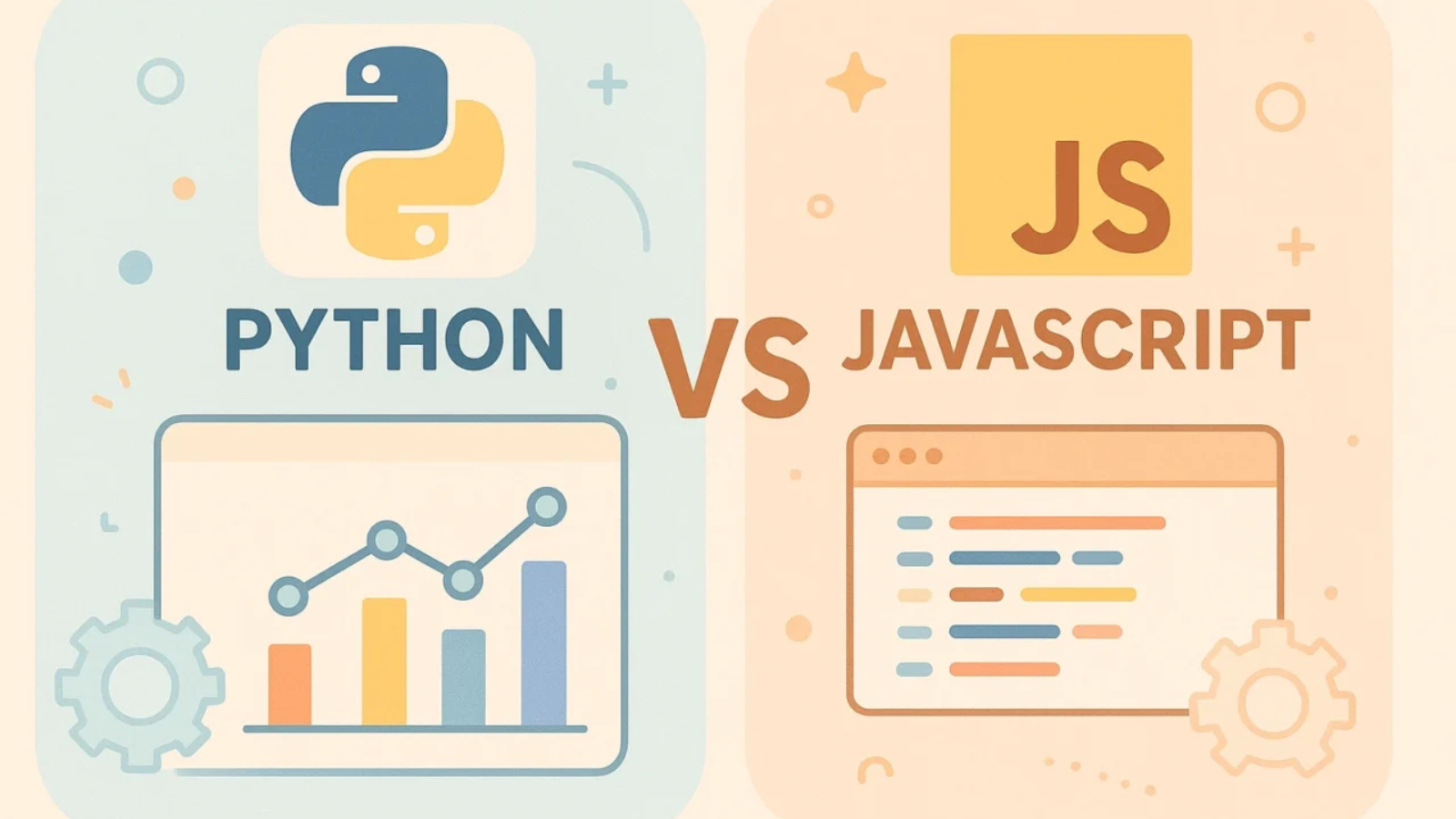
At a glance both Python and JavaScript look the same in that they are both a high level, interpreted, programming language that are designed to be as simple and flexible as can be, but in practice they are playing different roles in development. Python is typically used for AI (artificial intelligence), data analytics, and as a backend framework, whereas JavaScript is intended to add interactivity in regard to the web, or create mobile applications which dynamically involve user interaction. 

What is Python?

Python​‍​‌‍​‍‌​‍​‌‍​‍‌ is a high-level, general-purpose programming language which emphasizes a clear syntax that is often described as being quite similar to the English language. Its creator, Guido van Rossum, released it in 1991 and the main idea was that the code should be as readable as possible, just like normal English.

As a matter of fact, Python is now the top choice of developers, data scientists, and researchers because of its user-friendly nature and flexibility. The language is basically an all-in-one tool for any idea you have, from setting up servers for websites, to training deep learning models, to even task automation.

What really makes Python stand out from the crowd is the number of libraries it has. Libraries such as Numba, Pandas, TensorFlow, Scikit-learn, and Django offer endless possibilities to developers, anything from doing complex calculations for scientific research to building powerful web apps can be achieved in no time.

In addition, Python encourages quick coding and is very approachable for beginners, which means it is a great selection for people that are just starting out in programming.

Python is best suited for:

  • Data analysis and visualization
  • Machine learning and artificial intelligence
  • Backend web development
  • Automation and scripting
  • Software prototyping

What is JavaScript?

JavaScript is the major force that enables the World Wide Web to function. The language was launched in 1995 by Brendan Eich and after that, it has been constantly improved and extended to the point where it now forms the base of modern software development.

The main purpose of JavaScript when it was first developed was to bring interaction to web pages. Nevertheless, with enhancements like Node.js, React, Angular, and Vue.js, this technology can be employed both on the frontend and backend, thus allowing the creation of complete web applications with a single language.

In distinction from Python which according to the majority of users is meant to be utilized on server-side, JavaScript is executed directly in browsers, thus providing immediate changes and also dynamic user interfaces without the need to load the entire page again. Moreover, it is also the hardest to name besides a few that can do client-side and server-side programming simultaneously, i.e full-stack development.

JavaScript is best suited for:

  • Interactive and dynamic web applications
  • Frontend and full-stack development
  • Real-time applications (like chat systems or streaming apps)
  • Mobile app development (with React Native or Ionic)
  • Browser-based ​‍​‌‍​‍‌​‍​‌‍​‍‌games

Use​‍​‌‍​‍‌​‍​‌‍​‍‌​‍​‌‍​‍‌​‍​‌‍​‍‌ Cases of JavaScript

JavaScript remains the primary means of creating an interactive website, as well as for dynamic front-end development. Most of its utilization can be found in the following areas:

  • Frontend Web Development: JavaScript is the main source of energy for the change of dull user interfaces into interesting ones. Libraries like React, Vue.js, and Angular not only make frontend development easier, but also more efficient.
  • Backend Development with Node.js by using Node.js, JavaScript is transitioned to the server-side, thus full-stack development is achievable, which means that one language can be utilized for the whole application.
  • Mobile App Development Programmers can create cross-platform mobile applications that operate seamlessly on both Android and iOS through the implementation of the React Native framework.
  • Game Development: with the help of such engines as Phaser and Three.js, JavaScript can offer simple games that a user can run in a browser, as well as it can be used for 3D animations and graphics creation.
  • Real-Time Applications: JavaScript’s event-driven architecture is a perfect match for the needs of the apps that are dependent on the latest changes, for instance, a chat app, or a streaming service, where the user interaction is done in real-time.

Pros and Cons of Python

Advantages of Python:

  • It is very simple and extremely easy to understand.
  • Just right for quick development and making prototypes.
  • Which is basically a huge number of libraries for AI, data science, and automation.
  • Having a good number of developers spread all over the globe, its community worldwide is very supportive.
  • Extremely portable and can be easily integrated with other technologies.

Disadvantages of Python:

  • Compared to compiled languages such as C++ or Java, it is slower.
  • Not a very good choice for mobile app development.
  • Also, the support for browser-based applications is very limited.
  • Dynamic typing may sometimes cause runtime errors.

Pros and Cons of JavaScript

Pros of JavaScript:

  • Does not need any other software, and works straight away with browsers, thus enabling interactivity to be done in real-time.
  • Highly adaptable and can be used to create frontend, backend, and even mobile applications.
  • When done with the help of high-quality engines like V8, it is very fast in its performance.
  • Along with a large community, it also has a decent number of frameworks to provide support.
  • Asynchronous programming, which is the key to enabling real-time applications, is something JavaScript is particularly well suited for.

Cons of JavaScript:

  • Security-wise, it can have problems, as it is open on the client-side.
  • At times, it might be very hard to find the location of errors in asynchronous code.
  • Inconsistencies in performances may result from different browsers.
  • Non-strict typing may cause a presence of unfound logical errors. ​‍​‌‍​‍‌​‍​‌‍​‍‌​‍​‌‍​‍‌​‍​‌‍​‍‌

Python​‍​‌‍​‍‌​‍​‌‍​‍‌ vs JavaScript: Performance and Community Support

JavaScript is substantially faster than Python when it comes to performance. This is due to the fact that the engines it uses are optimized for the browser. JavaScript is thus the best candidate for web applications that are interactive and loading fast.

On the other hand, the Python development process is way more convenient and comfortable for logic-heavy types of applications like AI models, financial software, and data processing systems.

As far as community and ecosystem are concerned, the both languages that are being discussed here have strong ones. Python has a better grip on the academic and data science community, while in the web development sector, JavaScript has the leading position.

Which Language Should You Choose First?

When it comes to web development, frontend design, or building real-time apps, your first step should be learning JavaScript. Creating modern websites and apps is where it’s most needed, plus it carries one of the largest developer ecosystems in the world.

On the contrary, if you are attracted to dabbling in data science, automation, backend development, or AI then Python would be the best choice. The language is more user-friendly, simpler for beginners, and provides unlimited possibilities in the future tech fields.

Eventually, the majority of developers make a decision to learn both Python and JavaScript.

These two languages complement each other.

Conclusion: Python vs JavaScript – The Final Verdict

The Python vs JavaScript comparison is not about which is better overall, it is about choosing the most suitable tool for your goal. For instance, intelligent systems are to be built if you desire to automate tasks or analyse large datasets. In that case, Python is the best companion to have around. It not only makes the operations simple, but research-driven development also goes faster.

On the other hand, if your aim is to produce websites that engage visually, interactive dashboards, or real-time web applications, then JavaScript is the language that you must have.

Both Python and JavaScript have given ways to their successors, but still, they will not disappear soon. The brightest option? Getting proficient in both – the combination of Python’s intelligence and JavaScript’s interactivity is a perfect duo that defines present-day ​‍​‌‍​‍‌​‍​‌‍​‍‌technology.


Interesting Reads :

AI Security Posture Strategies for Safer AI Deployment

Computer Vision vs Machine Learning: Key Differences and Use Cases

The Rising Importance of Intelligent Testing in Modern Software Environments